Hearing Aids for Sensorineural Hearing Loss
A few weeks ago, we received an email asking for advice on which hearing aids were the best. Superficial siderosis hearing loss is one of the most common and challenging symptoms of this rare neurological condition. Over 90% of patients experience progressive sensorineural hearing lossOverview In approximately 95% of superficial siderosis patie... More, often reaching severe or profound levels as the disease advances. For many, hearing aids are the first and most important tool to remain connected with family, conversations, and the world around them.
The hearing aid landscape has changed dramatically in recent years. Disposable batteries are being phased out, rechargeable models are the new standard, and sound processing has improved. For individuals living with superficial siderosis, selecting the appropriate device can significantly impact their ability to maintain communication and quality of life.
Why Rechargeable Hearing Aids Matter
For many patients with superficial siderosis, tremors, spasticity, or poor dexterity, handling small zinc-air batteries can be nearly impossible. Rechargeable models eliminate this barrier.
- Convenience: Simple overnight charging provides a full day of use.
- Ease of use: Drop-in desktop chargers remove the need to fumble with cables or battery doors.
- Consistency: Rechargeables offer reliable performance without worrying about carrying extra batteries.
Best Hearing Aids for Severe-to-Profound Superficial Siderosis Hearing Loss
ReSound Nexia Power BTE (NX88-DWC, Rechargeable)

The latest power model from ReSound is explicitly designed for profound hearing loss.
Features:
- Rechargeable lithium-ion battery
- Telecoil compatibility
- Large tactile buttons
- Advanced feedback control
- TV-Streamer+ accessory for direct television streaming
This is the most recommended choice for patients seeking a rechargeable, powerful, and easy-to-handle solution.
Signia Motion Charge&Go SP IX

A rechargeable super-power BTE with very high output.
Features:
- Long-lasting daily charge
- Pocket remote available for non-smartphone users
- Noise reduction technology
- Sturdy behind-the-ear design
Phonak Naída Lumity L-UP with 675 Battery

Considered the gold standard for ultra-power output.
Features:
- Severe-to-profound fitting range
- Roger™ microphone ecosystem support
- TV Connector accessory for direct streaming
Cons: Uses disposable size-675 batteries, which may be challenging to manage.
Oticon Xceed UP with 675 Battery

One of the most powerful BTEs on the market.
Features:
- Range up to 146 dB SPL and 87 dB gain
- OpenSound Navigator for 360° hearing
- Telecoil and Bluetooth support
Cons: Requires disposable batteries.
Unitron Stride Blu B-UP
Ultra-power BTE built on the Blu platform.
Features:
- Severe-to-profound fitting range
- Automatic sound optimization
- Strong Bluetooth connectivity
Cons: Not currently rechargeable.
Widex MOMENT Power BTEs (BTE 13 D, BTE R D)
Known for natural sound quality and tinnitus support.
Features:
- Widex Zen tinnitus therapy programs
- Rechargeable and battery versions available
Cons: Not as powerful at the very top of the fitting range compared to ReSound, Phonak, or Oticon.
Fitting Considerations for Patients with Superficial Siderosis Hearing Loss
Why choose custom earmolds? Full-shell or skeleton earmolds in soft silicone provide a better seal and are easier to insert and remove.
Controlling the feedback. Newer models, such as Nexia and Signia IX, feature advanced suppression to reduce squealing at high volumes.
Make life easier with simplified programs. Limiting settings to three programs: Everyday, Speech in Noise, and Telecoil, prevents confusion.
Pocket-sized hardware remotes provide volume and program control without requiring smartphones.
Dedicated TV accessories (ReSound TV-Streamer+, Phonak TV Connector, Signia StreamLine TV) offer better clarity than older solutions like TV Ears.
When Hearing Aids Are Not Enough
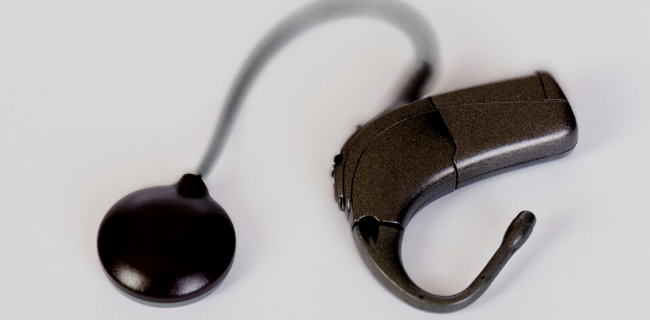
A time may come when even the best hearing aids may not fully overcome the damage caused by hemosiderin in superficial siderosis hearing loss. Cochlear implants (CIs) may be an option.
Clinical studies show most patients gain significant benefit, though long-term results vary. A consultation with a hearing specialist for hearing aids that no longer provide clarity may be able to explain why you might consider an implant. CIs bypass damaged inner ear hair cells and stimulate the auditory nerve directly.
Because hearing loss is one of the defining symptoms of superficial siderosis, research continues to focus on solutions:
- Audiovestibular studies are documenting the unique progression of SS-related hearing loss.
- Cochlear implant outcomes in SS are being tracked with encouraging short-term benefits.
- Clinical trials, such as chelation therapy studies, may include hearing outcomes as part of future protocols.
Patients registered with the patient registry will be notified of new studies as they open.
The bottom line
Superficial siderosis hearing loss presents unique challenges, but hearing technology in 2025 offers more hope than ever.
- Best first choice: ReSound Nexia Power BTE (rechargeable)
- Strong alternative: Signia Motion Charge&Go SP IX (rechargeable)
- Maximum output options: Phonak Naída L-UP and Oticon Xceed UP (battery-based)
- Additional options: Unitron Stride Blu B-UP and Widex MOMENT Power BTEs
For those whose hearing loss has progressed beyond the limits of amplification, cochlear implant evaluation remains an important step.
With advancements in technology, rechargeable solutions, and ongoing research, patients with superficial siderosis can make informed choices that maximize their hearing ability and preserve quality of life.